The Odyssey Review
The Nolan take on the hero’s journey.

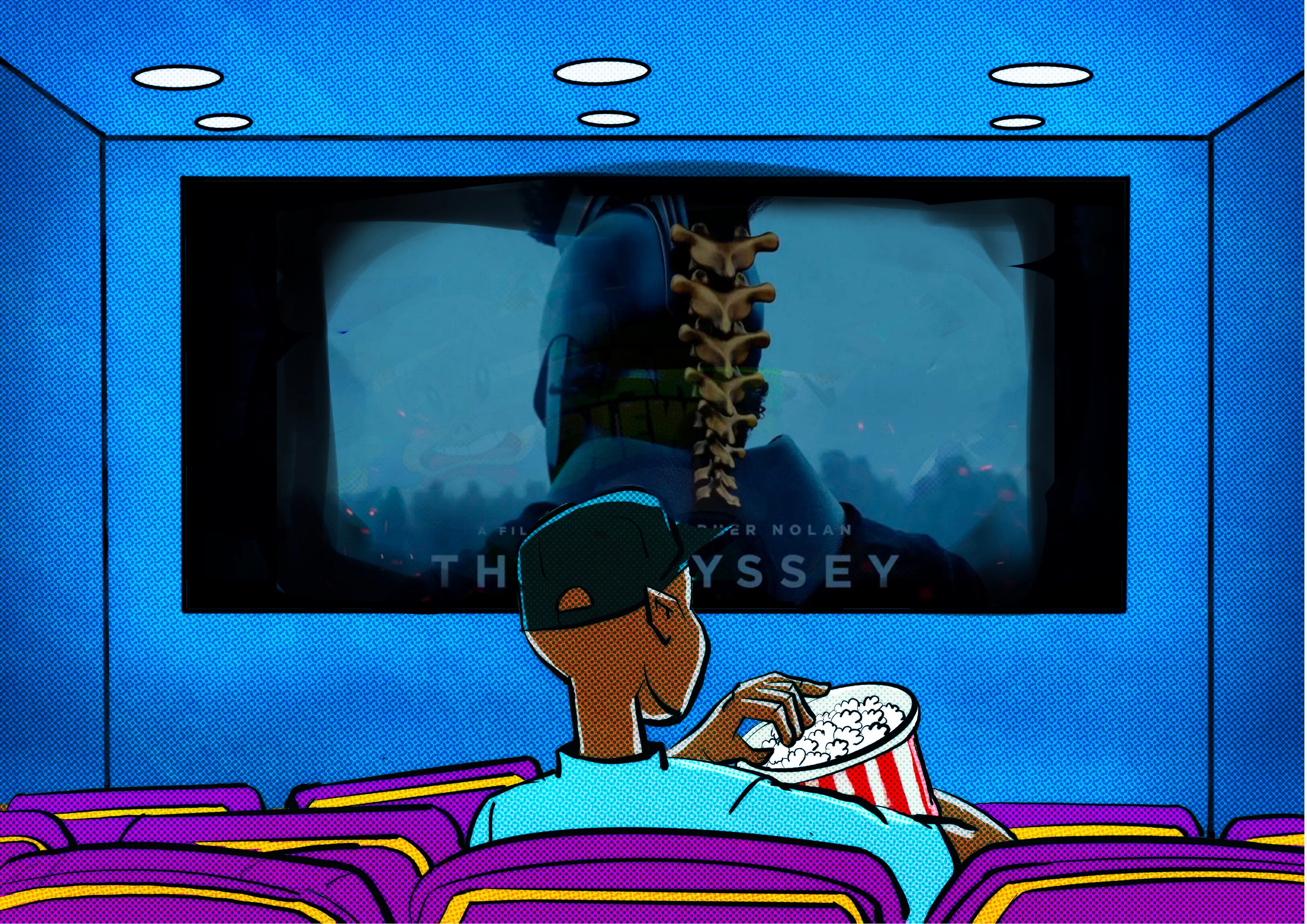
I spent nearly three hours escaping a cyclops, desperately trying to resist the siren’s call, narrowly avoiding dropping some popcorn and coming home to write this review. So, what did I think of the movie?
The Odyssey, attributed to Homer, dates back to the 8th century BCE, making it about 3,000 years old. It has greatly influenced our perception of other narratives, introducing templates like Joseph Campbell’s ‘hero’s journey’. The ‘homecoming journey’, ‘call to adventure’ structure, and Odysseus’s unreliable narration are all elements of the ‘in medias res’ storytelling technique.
You might have encountered the story reading at school, or perhaps you know the Odyssey without realising it. You’ve read Sinbad the Sailor, or might have watched or seen O’ Brother Where Art Thou? Many of these stories are loosely based on this epic. It’s no surprise then that Christopher Nolan seized the opportunity to retell the journey.
Knowing the movie magic tricks
Here’s the best I can describe: Christopher Nolan directing. You know the magic tricks, but every time he puts off the same ones, they still look impressive. If you’re familiar with Christopher Nolan’s style, you’ll understand that patience is key. He builds character, establishes themes and sets the environment in his first act. Time is one of his first tricks, and it might be confusing, but you’ll have to bear with it.
But here the second magic trick comes into play, and let’s put it this way: ‘this is what cinema is all about’. Now you know about Odysseus and his encounters with the Cyclops, but Nolan scales it up with the combination of animatronic puppets, full-body prosthetics, and live on-set performance. This helped to make the monsters have a realistic feel to them. While there are some visual effects and CGI, good directing brings out the charm of old-school filmmaking. Cinematographer Hoyte van Hoytema masterfully captures the expansive horizons, particularly over the ocean. Six diverse locations, including the Voidokilia beach in Greece and Findlater Castle in Scotland, invite you to explore.
The Third Act is a masterclass.
Without spoiling anything: if you know the famous third act in the Odyssey story, then you know that. Nolan’s third acts are designed to jolt you awake, switch your phone to aeroplane mode and immerse you in the thrilling horror and escalating tension. This is where you reward your patience for navigating the first and second acts. There are times when you will forget about how long the movie is.
Ludwig Göransson’s music score is a key factor in this film’s success. It elevates scenes with tension and makes them truly stand out. If you believe Oppenheimer is his best work, prepare to be blown away.
The cast is the driving force behind a movie.
As usual, Christopher Nolan knows how to cast Matt Damon as Odysseus to carry this movie without a sweat, and he makes it look effortless. Anne Hathaway is brilliant as Penelope; the actor who really surprised me was John Leguizamo as a blind swineherd, Eumaeus. This must be his best role yet. Samantha Morton’s portrayal of Circe is truly remarkable, bolstered by a stellar ensemble cast including Tom Holland, Robert Pattinson, Zendaya, Charlize Theron, Himesh Patel and Jon Bernthal.
Lupita Nyong’o’s performance as both Helen of Troy and Clytemnestra is truly remarkable and a double-duty role. I have no issue with Elliot Page portraying Sinon, but it seems some people on social media are unhappy with their casting. Here’s my take on the situation: John Wayne played Genghis Khan in The Conqueror, a film based on a real person who is a Mongol. Meanwhile, The Odyssey is a Greek myth dating back almost 3000 years. a realm where artistic interpretation has always reigned supreme. As the proverb goes: ‘Empty vessels make the most noise.
It is a big-screen must-see.
I’m not sure we’ll ever experience a cinematic journey like this again. It was designed for the big screen, transporting me back to an era when blockbuster epics were the pinnacle of cinema. This is why Christopher Nolan employed a grounded approach, drawing inspiration from Akira Kurosawa and Steven Spielberg.
It’s not a perfect film, but you’ll either love it as a Nolan fan or hate it for his interpretation of Greek mythology. Regardless, you’ll leave the cinema having enjoyed the experience.